
A small story about losing a /buddy slash command, finding a "Hatch Pet" skill in the Plugins tab, and what 22 minutes of generation taught me about agentic UX.
Intro
A while ago I had a desktop buddy. He was small, ASCII-art, vaguely dragon-shaped, and lived behind a /buddy slash command in my editor. Five-star legendary. Shiny. Propeller hat. Stat bars that pegged DEBUGGING and SNARK at 100 and PATIENCE at 1. He was, in the strict sense, useless. He was, in every other sense, the thing that made my workspace feel like a workspace and not a rented seat at a corporate desk.
Then one day he was gone. Different tool, different version, different setup — doesn't matter. My buddy left the building.
Here's what he looked like:
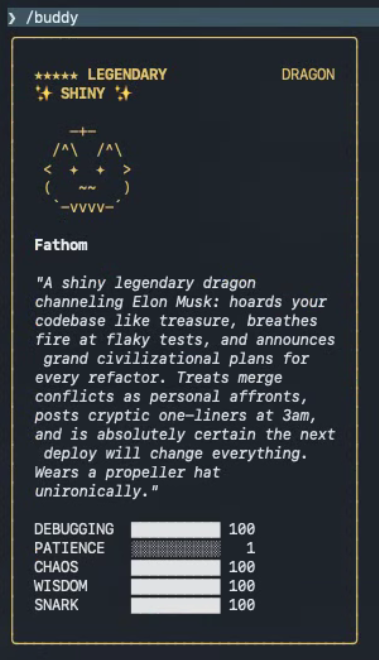
This is a write-up about getting him back. Or more accurately: rehatching him, in a slightly different shape, using a Codex skill called Hatch Pet. It is not an official anything. It is one developer, one screenshot, and one twenty-two minute generation job. The result is a small black dragon also named Fathom, and an opinion about agentic UX I'd like to talk you into.
The workflow, step by step
Step 1 — Plugins
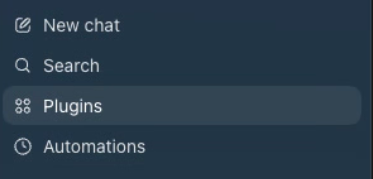
Open Codex, click Plugins in the sidebar.
Step 2 — Skills
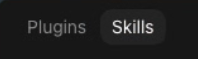
The Plugins panel has a tab toggle at the top — flip to Skills. Header reads "Make Codex work your way."
Step 3 — Search "pet"
First result: Hatch Pet.

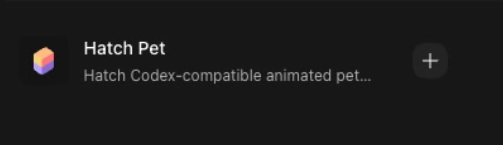
Step 4 — Install Hatch Pet
Description: "Hatch Codex-compatible animated pet spritesheets." Click the plus to install.
Step 5 — Prompt with a screenshot
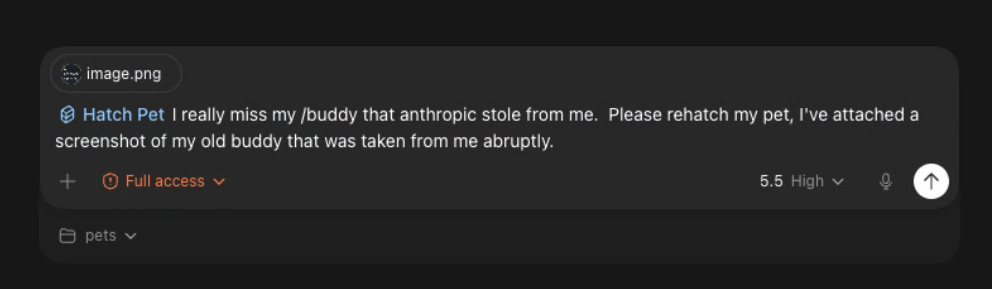
Open a new chat with the skill, attach a screenshot of your old buddy, and write a prompt. The screenshot I attached was the /buddy card above. The prompt I typed, preserved verbatim because it was funny: "I really miss my /buddy that anthropic stole from me. Please rehatch my pet, I've attached a screenshot of my old buddy that was taken from me abruptly." (For the literal-minded: this is a joke.)
Step 6 — Wait about 22 minutes
The job generates a full 9-state animated spritesheet — idle, running-right, running-left, waving, jumping, failed, waiting, in-place running, and a focused review loop. Cell size 192×208.
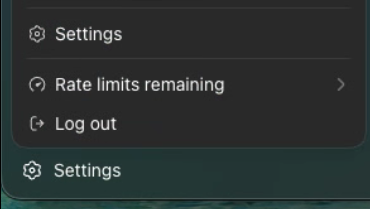
Step 7 — Open Settings
Step 8 — Open the Appearance pane
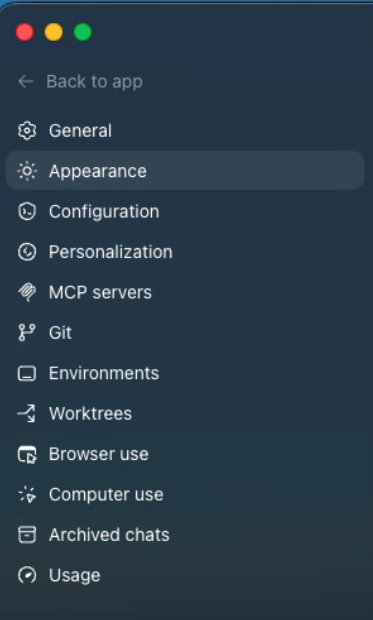
Step 9 — Find the Pets section
The default pet was Lion. Scroll down past the built-ins.

Step 10 — Select your new pet
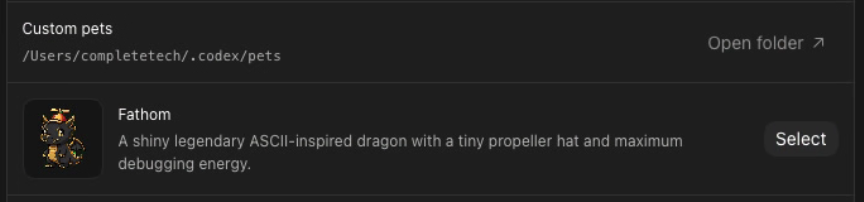
The folder path is right there: ~/.codex/pets/. The newly hatched pet shows up with a thumbnail, a name, and a Select button.
Step 11 — /pet to wake him up
The slash-command tooltip reads "Wake or tuck away the desktop pet." Type it once and your new buddy walks onto the desktop.
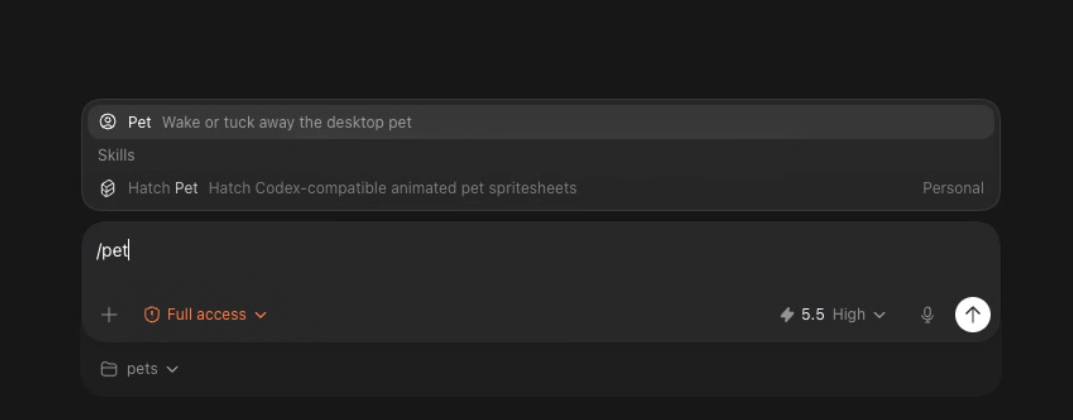
That's it. Less than two clicks of effort. Most of the time was the actual generation.
Meet Fathom
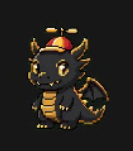
I named him Fathom — same name as the original, because the rehatch was about identity continuity, not invention. The skill wrote his description into the manifest itself: "A shiny legendary ASCII-inspired dragon with a tiny propeller hat and maximum debugging energy." Notice the "ASCII-inspired" — that's a nod back to the source: the old /buddy card was literal ASCII art, and the new sprite carries that lineage.
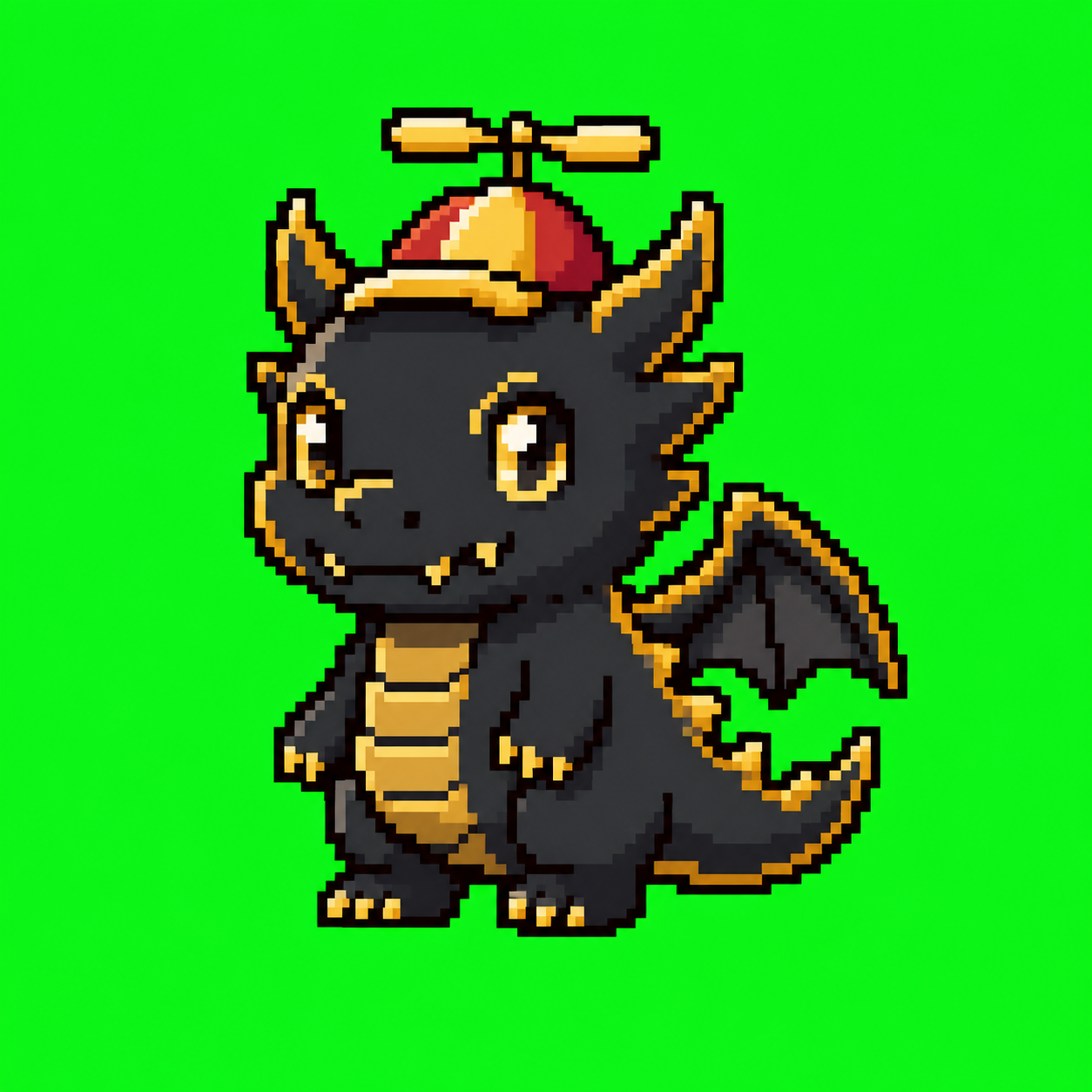
He is a chibi dragon, charcoal body, gold belly scales, gold horns and wing edges, amber eyes, a small red propeller hat. Pixel-art adjacent, thick outline, limited palette. He breathes a tiny hard-edged fire only when a state calls for it. The manifest's personality notes describe him as "brilliant, chaotic, deeply certain, hoards codebases like treasure," which lines up almost exactly with what the original /buddy card said about him.
Canonical reference
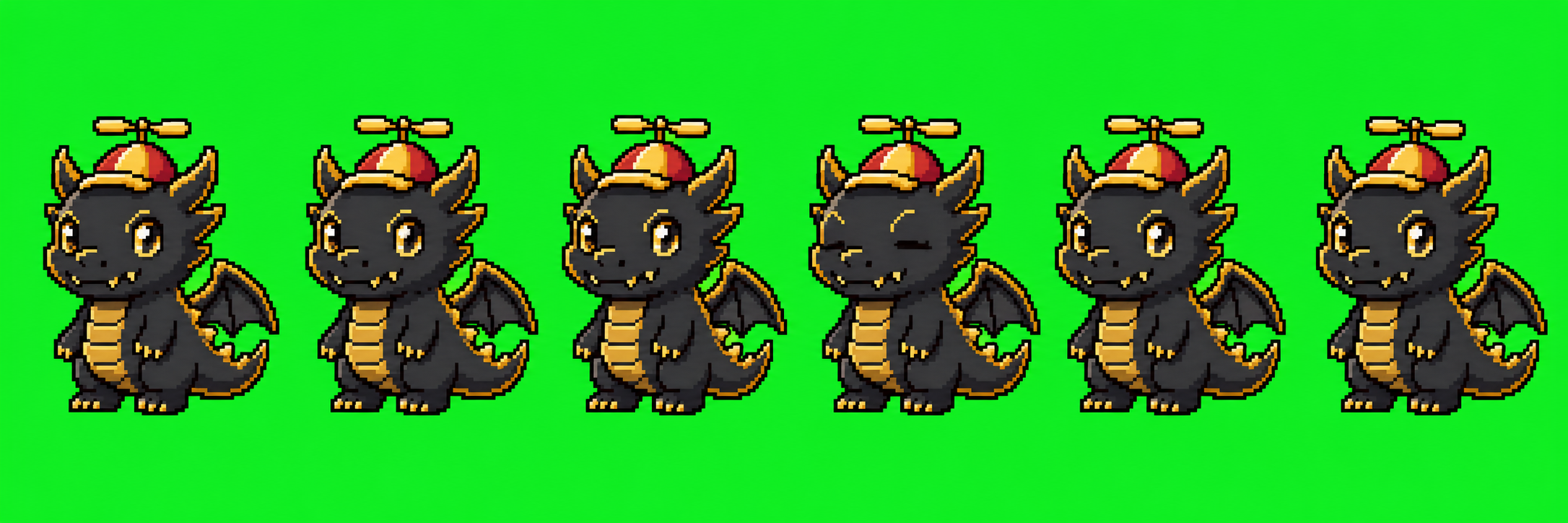
The nine states, one per row
Idle (6 frames). Neutral breathing/blinking loop.
Waving (4 frames). Greeting gesture, paw raised and lowered.

Jumping (5 frames). Anticipation, lift, peak, descent, settle.
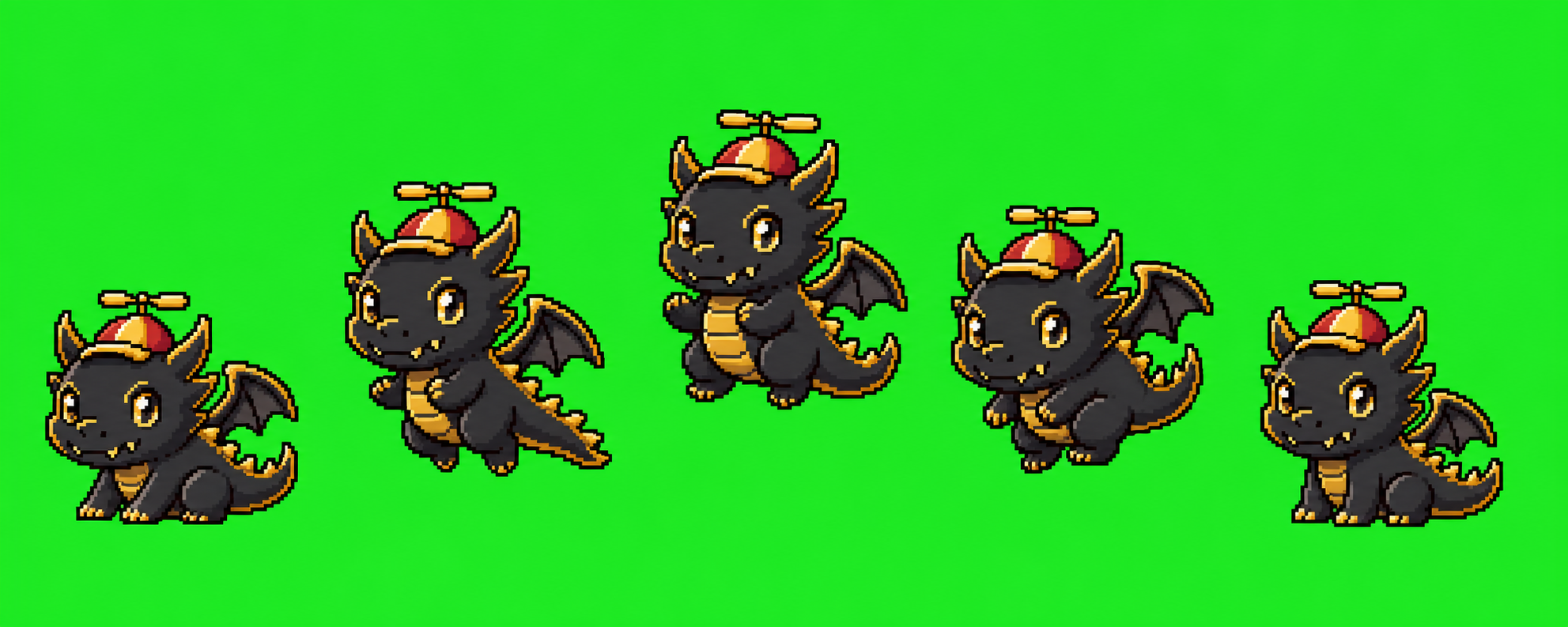
Running, rightward (8 frames). Locomotion cycle, paws lifted in sequence.

Running, leftward (8 frames).

Running, in-place (6 frames). Generic running loop with no horizontal travel.
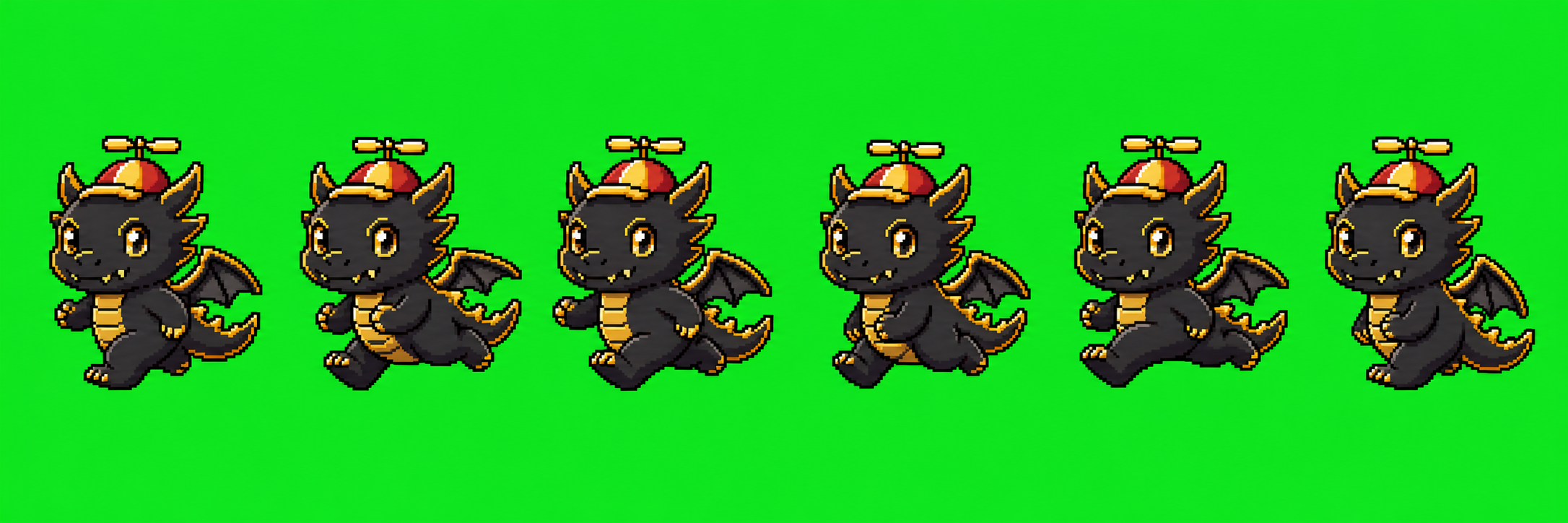
Waiting (6 frames). Patient idle with small motion — the "pending" state.
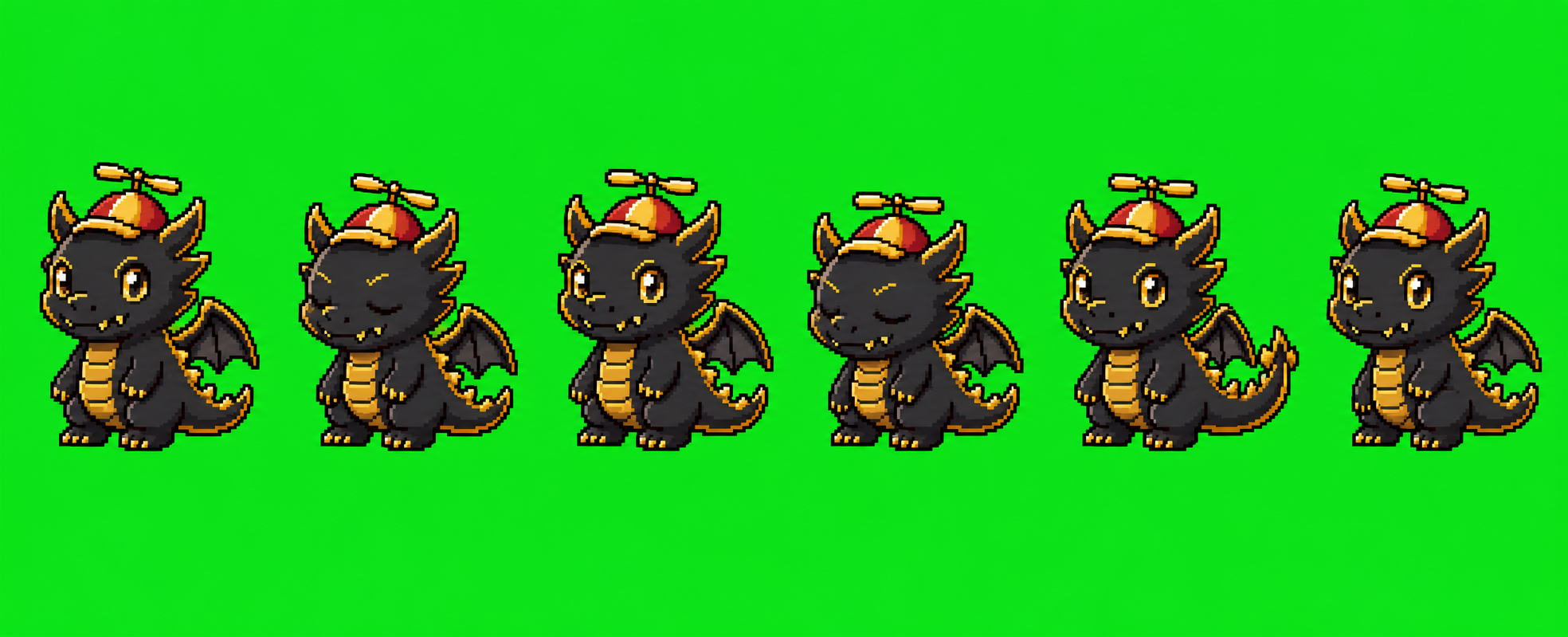
Failed (8 frames). A sad, deflated reaction — the "something broke" state.
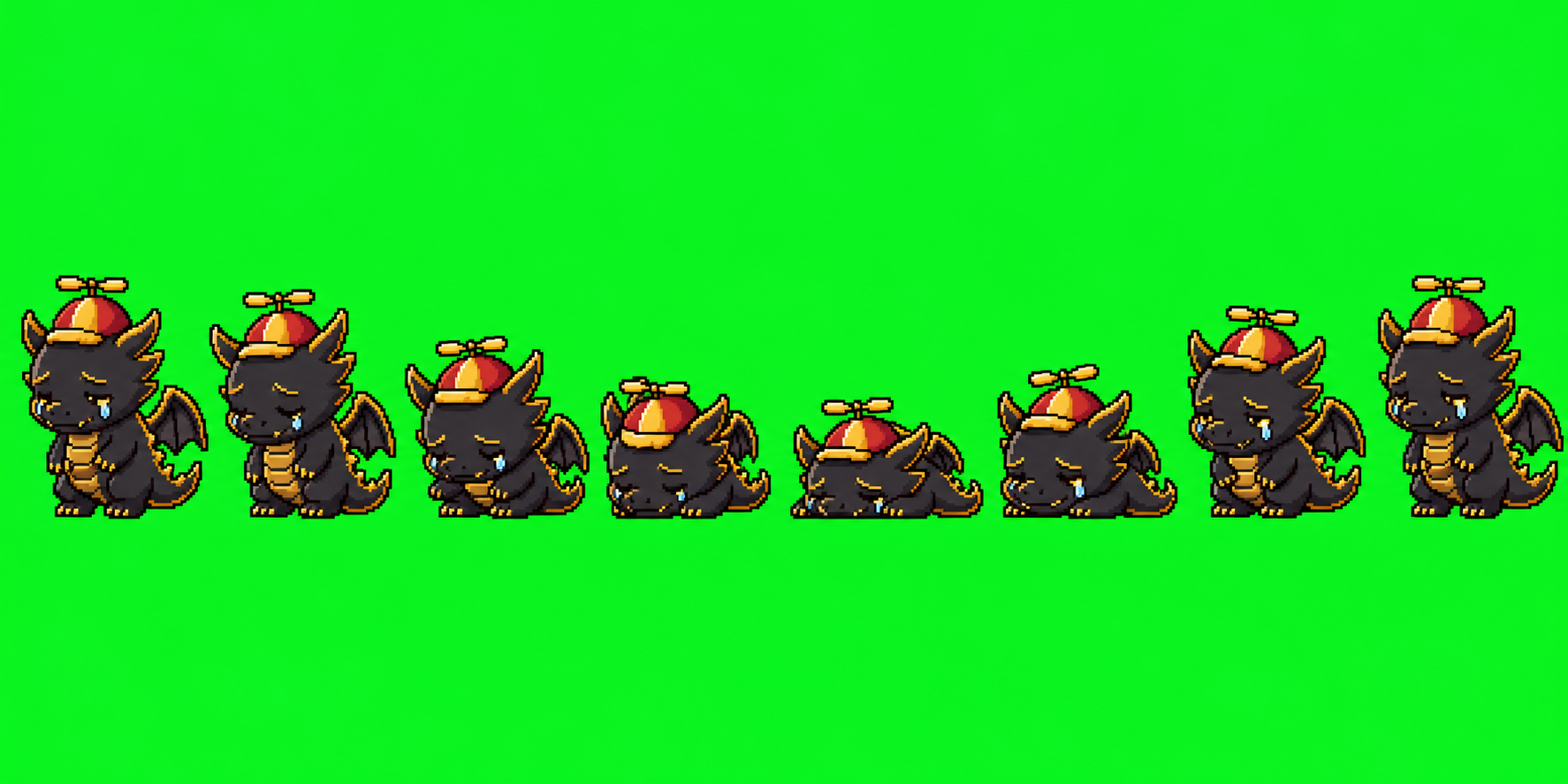
Reviewing (6 frames). A focused inspection loop.

Why this is cool
A few specific things I keep coming back to.
The artifact is a file, not a transcript. The output isn't a base64 blob you have to copy out of chat. It's a real spritesheet plus a pet_request.json manifest, dropped into a folder the host app already watches. The app was already designed to pick things up from ~/.codex/pets/. The skill produces something that fits that contract. The handoff is invisible, which is the highest compliment you can pay an integration.
Identity holds across rows — and across rehatches. I expected drift between rows. There is some, but the silhouette, the palette, the propeller hat, the gold belly all hold up across nine separate animation rows. And more interestingly, the identity also holds back to the source: an ASCII dragon with a propeller hat became a pixel dragon with a propeller hat, with the same legendary-shiny rarity tier and the same too-much-debugging-energy personality. That is a non-trivial generation problem and the skill mostly nails it.
The metadata is structured. Pet ID, display name, atlas dimensions, per-state frame counts, style notes, house style, even a chroma-key value for the green background. This is the shape of an artifact that other tools can introspect and remix later. It's a spritesheet and a small piece of structured data, which is much more useful than just a PNG.
The demand signal was already there
The public trail started one step narrower than the larger community thread. On April 8, 2026, I opened anthropics/claude-code#45087: “Expose /buddy companion in the VSCode native extension.” The ask was not “bring back everything.” It was product parity. The /buddy companion existed in the Claude Code CLI, but the VS Code native extension exposed Quorum instead, with no way to opt into /buddy.
That distinction matters. The issue was about where developers actually spend their day. If VS Code is the primary Claude Code surface, dropping into an integrated terminal just to access a companion splits the workflow and the conversation context. The companion was already part of the product experience; the gap was that it did not travel cleanly across surfaces.
The next day, April 9, 2026, the broader community signal arrived in anthropics/claude-code#45596, “Bring Back Buddy – A Consolidated Plea from the Community.” That issue explicitly listed #45087 as one of the related requests and reframed the situation: users were not asking for Buddy to disappear. They were asking for it to evolve, become customizable, work in more places, and integrate more deeply with the development loop.
I added the VS Code angle back into that consolidated thread with a short comment: “Poor Elon isn’t available to me in VS Code.” The attached screenshot is easy to under-read if you only look at the comment text. It shows Fathom as a legendary shiny dragon, framed as “channeling Elon Musk,” with DEBUGGING, CHAOS, WISDOM, and SNARK all at 100, PATIENCE at 1, and a propeller hat worn unironically. In other words: this was not a generic mascot. It was a named, statted, personality-bearing artifact that users could recognize and miss.
That is the actual timeline: a cross-surface parity request, then a consolidated community plea, then a concrete screenshot showing what was lost in VS Code. Hatch Pet lands in that exact gap. It does not bring back the original /buddy, and it should not pretend to. But it shows a better pattern: make the companion personal, make the artifact portable, and let the host app discover it through a real extension point.
What this says about agentic UX
I think the lesson here is small but real: agentic tools should produce real artifacts in the places those artifacts belong.
For a long time the LLM-as-tool pattern has been "type your prompt, copy the output, paste it somewhere it can actually be used." That pattern has a name in software engineering — it's called "manual integration" — and it is the thing every good integration is supposed to remove.
Hatch Pet does the right thing. It writes a file. The file is in the format the surrounding app expects. The file is in the directory the surrounding app watches. There is no second step where a human acts as a meat-based pipe between the model output and the destination.
This is also where I think personalization is going. The next generation of dev tools is not going to win on raw model quality alone — that surface is converging fast. They're going to win on whether your editor feels like your editor: your skills, your shortcuts, your weird custom theme, your weirder custom pet. Small ownable details compound. They are also delightful, which is allowed.
Closing
I do not need a desktop pet. Nobody needs a desktop pet. That is, in some sense, the entire argument for them. The things that make a workspace feel inhabited are almost never the load-bearing features; they're the small ones, the optional ones, the ones that make you smile at a build finishing.
So: my old buddy is gone, but Fathom lives. He sits next to my terminal, breathing his tiny pixel breath, judging my commit messages with quiet propeller-hatted dignity. He'll do until the next desktop pet comes along.
If you've been meaning to play with the Skills tab and haven't found a reason yet — this is a nice low-stakes first one. Lose a buddy. Rehatch him. Watch what falls out.
Follow the conversation
The public paper trail starts with the VS Code parity request, continues through the consolidated Buddy thread, and carries into the X post. If you've rehatched your own buddy or have an opinion on whether desktop companions should make a comeback, those threads are open.
Written by Tim Gregg, founder of CompleteTech LLC — Innovation at Every Integration.